Jazz English

Tatabánya Jazz Camp


Now in its fourth session, the biannual Tatabánya jazz camp has gained a special place among the many European summer jazz courses. Located in an industrial town 60 kilometers (37 miles) from Budapest, the camp offers practical and theoretical investigations in creativity and improvisation. It features classical music as well as jazz teachers, and the program includes lectures on the use of improvisation in classical and jazz teaching methods. Among this year’s lecturers were Pavel Blatny from Prague and György Szabados from Budapest.

Spring Thaw


It can’t be said that spring rejuvenated Hungarian jazz, but some important events did occur that, despite economic difficulties, revealed continued signs of jazz life.

Spring Festival


The Budapest Spring Festival, the capital’s main cultural attraction, offered jazz programs this year. A concert by John McLaughlin and Gato Barbieri attracted about 12,000 fans. McLaughlin arrived with a single acoustic guitar, but in the company of bass virtuoso Jonas Hellborg, he captivated the audience with his unique technique and sensitive musicality. Unfortunately, the same could not be said of Mr. Barbieri, whose empty, mechanical repetition of his 1970 Latin-rock style was utterly unconvincing.

Spring Events


The most exciting jazz event of this spring in Budapest was the March concert featuring the Wayne Shorter Quintet and the Al DiMeola Band. Shorter's heavy funky music and fine improvisations attracted the 8,000-strong audience while DiMeola’s soft Brazil songs were of the same type as his performance in Hungary two years ago.

Recording Boom


1988 has marked a significant change in the record production system of Hungary. It has been the year when the monopoly of the state-owned Hungaroton Record Company broke up, giving room to different labels and private initiative.

The first step was taken by Hungarian Radio which started its own label, Radioton, pro­ducing a series of recordings, including American blues singer Jerry Ricks’ debut album.

Peter Brötzmann (The Interview)


Swiss pianist Irene Schweizer called him “the father of German free jazz”, and there are other terms, like “Teutonic”, “martial” that attempted to characterize his music and perso­nality. Anyhow, coming from the now legendary Wuppertal free circle, multi-reedman Peter Brötz­mann became one of the most active jazz musicians on the international jazz scene of the ‘80s adding to his image an entirely new dimension.

Pest Fest


At last the ice has been broken, the Hungarian jazz circuit saw the birth of a new event in July this year, the Budapest Jazz Festival. Over the years the once flourishing national network of jazz festivals, spanning towns like Nagykanizsa, Miskolc, Békéscsaba and Debrecen in the ‘70s, has been shrinking; now only the latter remains on the map.

And even the driving force behind the circuit, Hungarian Radio, now looks as if it’s going to throw in the towel. Budapest has other, new arganizers.

Feliratkozás a következőre: Jazz English

A Jazz ideje (PDF)


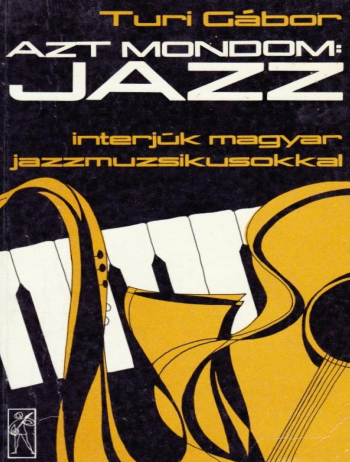
Azt mondom Jazz (PDF)


Jazz from Hungary (PDF)


Életfa (PDF)


Jazz a várban (PDF)


Kilátások (PDF)